
Water-damaged drywall repair in Waukesha
The leak is fixed. Now the ceiling or wall needs to be. We cut out what got wet and rebuild it.
Get a free estimate- Common causes
- Roof leaks, ice dams, plumbing, sump failure
- First check
- Moisture readings beyond the visible stain
- Before rebuilding
- Leak repaired and framing dry
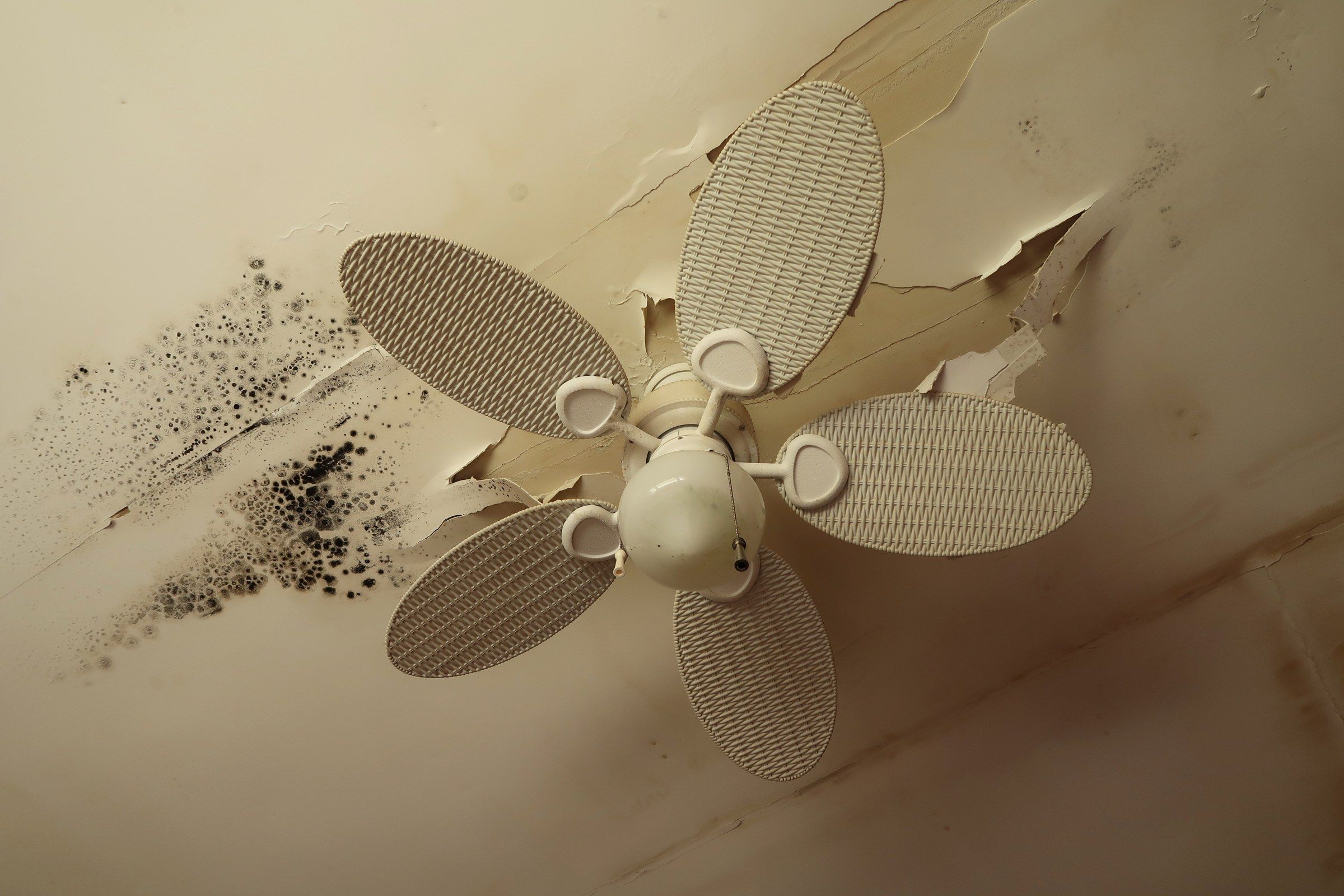
Water ruins drywall quickly. The board swells and goes soft. The paper lets go. Paint bubbles and peels. Leave it wet for a few days and mold moves in behind it.
We deal with what the water left behind. Wet board comes out. The space behind it gets dried. New board goes in and is finished to match. If the leak is still active, we will tell you to fix that first.
Repair or replace
A light stain on board that is still hard can be sealed and painted. Board that sags, crumbles, smells or feels spongy has to go. So does anything that sat in standing water.
Stains lie about the size of the problem. Water runs along framing and soaks insulation well away from the mark you can see. We use a moisture meter to find the real edge, then cut a few inches past it.
What causes it
Roof and flashing leaks
Stains on upstairs ceilings, often near chimneys and vents.
Ice dams
Winter stains along the outside edge of ceilings.
Pipes and fixtures
Leaks from bathrooms above, supply lines and drains.
Basement water
Wet board along the floor after heavy rain or a failed pump.
Condensation
Peeling ceilings in bathrooms without a working fan.
Order of work
Stop the water
A roofer or plumber fixes the source before we start.
Find the limits
Meter readings show how far to cut.
Tear out
Wet board and insulation are bagged and removed.
Dry down
Fans and time until the framing reads dry.
Rebuild
New insulation and board, taped, finished and sealed for paint.
Building it back better
Where water is likely to return, we use board made for it: mold-resistant panels in baths and basements, held half an inch off concrete floors. Around a tub or shower the right backer is cement board.
Old stains next to the repair get a coat of stain-blocking primer. Without it, the brown ring comes straight back through fresh paint.
Why not just paint over it
Mold stays out
Wet material is removed, not sealed in.
The ceiling stays up
Soaked board loses its grip on the screws.
The stain stays gone
Sealed properly, it does not bleed back.
Claims go smoother
We can itemize the estimate for your insurer.
What sets the price
The stain is a clue. The price depends on what is behind it.
How far it spread
Water runs along framing and wicks through gypsum. The wet area is usually larger than the mark. We meter it and cut back to dry board.
How long it sat
A day of clean water is a small repair. A week means soft board, wet insulation and possibly mold on the back of the paper.
Wall or ceiling
Ceilings cost more. Wet ceiling board also sags and can come down in sections.
Insulation
Wet batts lose their value and hold moisture against the framing. They come out and get replaced.
Finish match
New board has to be blended into the old surface, texture included.
The order of work
First, the source. A supply line, a drain, a roof, an ice dam, a failed shower pan. Until that is found and fixed, any repair is temporary. If you are not certain the leak is solved, we leave the cavity open so it can be watched.
Second, drying. Framing and the cavity need to come down to a normal moisture reading. Fans and a dehumidifier do most of the work. In a Waukesha basement in August, that can take several days. Closing a wall over damp studs traps the problem inside.
Third, rebuild. New insulation where needed, new board, tape, three coats, sanding, texture. Then a stain-blocking primer over any remaining marks on adjacent surfaces before paint.
Mistakes to avoid
Painting over it
Stain blocker hides the mark. It does nothing for soft board or a wet cavity.
Waiting
Board that stays wet for days weakens and can grow mold where you cannot see it.
Patching too small
Cutting only the stained spot leaves damp board at the edges. Cut to dry material.
Ignoring the cause
The same leak will stain the new board in weeks.
If you plan an insurance claim, photograph everything before demolition and note the dates. Your insurer decides coverage. We can give you a written scope listing what was removed and replaced, which is what an adjuster needs to see.
Right now: stop the water, move belongings, run a fan. If a ceiling is bulging with trapped water, keep people out from under it and call.
Reading the signs
Brown ring, dry and firm
An old leak that stopped, or a slow one. Check that the source is fixed. If the board is solid, it can be sealed and repainted without replacement.
Soft or crumbling
The gypsum core has broken down. That section comes out.
Bubbling paint or tape
Water got between the layers. Tape lifts first. The joint needs to be stripped and rebuilt once dry.
Sagging ceiling
The board is holding water or has lost its grip on the screws. Treat it as urgent and stay out from under it.
Musty smell, no stain
Moisture inside the cavity. Worth opening a small inspection hole before it shows on the surface.
Location tells you a lot. Stains under a bathroom usually trace to the tub drain, the toilet seal or the shower valve. Stains near an outside wall or chimney usually trace to the roof or flashing. Stains that appear in late winter along the eaves often come from ice dams.
Basement walls are their own case. Damage along the bottom edge points to water on the floor. Damage higher up points to a pipe or a window well. We note what we see and tell you which trade to call if the source is not ours to fix.
When the repair is finished, keep an eye on it through the next heavy rain or the next few weeks of showers. If the stain does not return, the source was found. If it does, call before it spreads.
Good to know
After a leak is repaired, ask the plumber or roofer exactly what failed and where. Write it down with the date. If a stain shows up in the same room again, that note tells you at once whether it is the old problem or a new one.
Consider small upgrades while the wall is open. An access panel behind a tub or shower valve costs very little now and saves cutting the wall next time. Moisture-resistant board is a sensible swap on a wall that has already been wet once.
Before and after

Stock photos used to illustrate the change. Not a specific project of ours.
Water trouble in Waukesha
Parts of Waukesha sit low along the Fox River, and the city has seen serious flooding in wet years. Even away from the river, clay soil and spring rain keep sump pumps busy. Finished basements are where we see the most damage.
Upstairs, the usual culprit is winter. Ice builds at the eaves of older, lightly insulated roofs and meltwater finds its way onto the ceiling below.
Questions about water-damaged drywall repair
How fast should wet drywall be removed?
Within a day or two if possible. The longer it stays wet, the more likely mold becomes.
Can you tell if there is mold?
We will see it when the wall is opened. Small areas are cleaned and treated. Large areas need a remediation contractor, and we will stop and tell you.
Will the repair match the rest of the ceiling?
Yes. The joints are feathered and the texture matched. The whole ceiling should then be repainted.
Do you deal with insurance adjusters?
We give you a detailed written estimate and photos. You handle the claim itself.
My stain is dry and old. Is it a problem?
Maybe not. If the board is hard and flat, sealing and painting may be all it needs. We can check it.
Work that often goes with this
Ceiling Drywall Repair
Cracks, sags, pops and stains fixed overhead.
DetailsBasement Drywall Installation
Walls, ceilings and soffits for finished lower levels.
DetailsDrywall Repair
Cracks, pops, dents, loose tape and broken corners put right.
DetailsDrywall Patching
Holes cut out, backed, filled and blended in.
DetailsGet a price for water-damaged drywall repair in Waukesha
Describe the job, add a photo, and we will send a written estimate.