
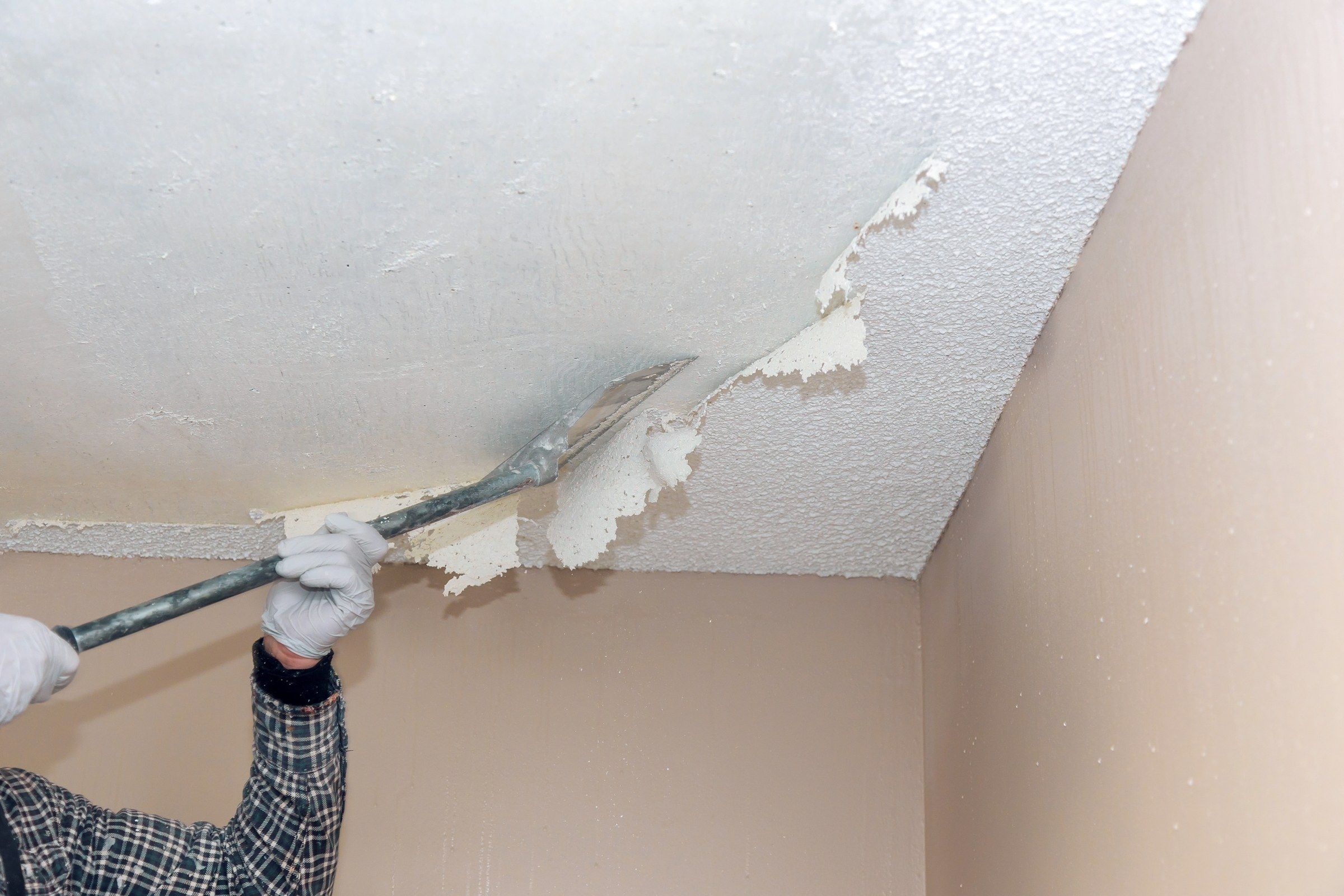
Popcorn ceiling removal in Waukesha
Scraped, repaired, skimmed and sanded. A flat ceiling in place of a dusty, dated one.
Get a free estimate- Best for
- Homes from the 1960s to 1980s with sprayed ceilings
- First step
- Lab test for asbestos on older texture
- Average bedroom
- Three to four working days
Nobody installs popcorn ceilings any more, and for good reason. They trap dust and cobwebs. They cannot be cleaned. They crumble when a ladder bumps them. And once they are stained or patched, they never match again.
Getting rid of one is a two-part job. Part one is taking the texture off. Part two is making the bare ceiling presentable, which is where most of the hours go. We do both.
What is under the popcorn
Texture was sprayed over ceilings that had been taped once and left. Scrape it off and you find tape edges, screw heads, ridges and the odd gouge. None of it was ever meant to be seen.
So after scraping, the ceiling is finished the way it should have been to begin with. Loose tape is replaced. Joints and fasteners are coated. Then the whole surface gets skim coats until it is flat from wall to wall.
Good reasons to remove it
You are repainting anyway
Ceilings first, then walls. It is the right order.
There is a stain or a patch
A repair in popcorn always shows. A repair in a smooth ceiling does not.
You are adding lights
Recessed cans and popcorn do not mix well.
The texture is falling
Flakes on the furniture mean the bond has failed.
The steps
Test
A sample goes to a lab if the house predates the late 1980s.
Mask the room
Plastic on floors and walls, fixtures down or wrapped.
Wet and scrape
Texture is soaked and taken off with wide blades.
Repair and skim
Joints fixed, then two or three thin coats over everything.
Sand and clear out
Vacuum sanded, checked with a light, plastic rolled up and removed.
When scraping is not the answer
Some popcorn has been painted so many times that water will not soften it. Some sits on board that is too fragile to scrape. And some tests positive for asbestos, in which case we do not disturb it.
For those ceilings we install a new layer of thin drywall directly over the old surface, screwed into the joists, then tape and finish it. The result is the same smooth ceiling, and the old texture stays sealed where it is.
The payoff
More light
Flat ceilings bounce light around the room.
Cleaner air
No more texture shedding dust.
Simple upkeep
Roll on a coat of paint whenever it needs one.
Buyer appeal
One less thing on a buyer’s list of projects.
What sets the price
Ceiling area is the base. These five things move the number from there.
Painted or not
Raw texture soaks up water and scrapes off clean. Painted texture fights back. One coat of paint slows the job. Three coats can make scraping the wrong method.
What is underneath
Texture was often used to hide rough taping. Expect the joints to need rebuilding once the ceiling is bare.
Height and shape
Eight-foot flat ceilings are fast. Vaults, stairwells and two-story rooms need staging.
Furnished rooms
Empty rooms are quicker to protect. Furniture that stays must be wrapped completely.
Finish wanted
Smooth and paint-ready takes the most work. A light new texture hides more and costs less.
Testing comes first
Sprayed ceiling texture from before the mid-1980s may contain asbestos. You cannot tell by looking. A lab test on a small sample settles it, and results usually come back in days. If your house is from that era and the ceiling has never been tested, do that before anyone scrapes anything.
A positive result changes the job. Removal then belongs to a licensed abatement contractor. The other route is to leave the texture undisturbed and cover it with new thin board. That gives the same flat ceiling without scraping.
Lead paint is a separate question in homes built before 1978. If the ceiling has old paint layers, tell us. It affects how the work is contained and cleaned up.
Where removals go wrong
Gouged board
Scraping too hard or too dry tears the paper face. Torn paper must be sealed before any compound goes on, or it blisters.
Too much water
Soaking the ceiling loosens the joint tape and softens the board. The texture should be damp, not drenched.
Stopping at the scrape
A scraped ceiling is not a finished ceiling. It needs skim coats and sanding before paint.
Skipping primer
Bare compound and old paper take paint unevenly. Prime the whole ceiling first.
Before we arrive, empty the room as far as you can and take down anything on the walls. We handle floor and wall protection, mask the fixtures and vents, and shut off the air handler for the room so dust does not travel through the ducts.
Plan to be out of the room for several days. Scraping is quick. Drying between skim coats is what takes the time, and it cannot be rushed without cracking.
Scrape, skim or cover
There are three ways to get rid of a popcorn ceiling, and the right one depends on the ceiling. Scraping suits unpainted texture on sound board. It is the least material and the most mess.
Skimming over suits texture that is painted hard and well bonded. The peaks are knocked down and the whole ceiling is coated flat with compound in several passes. Nothing is removed, so less dust is released, but it takes more coats.
Covering suits ceilings in poor shape or texture that should not be disturbed. New thin board is screwed through to the joists and finished like any new ceiling. The room loses a fraction of an inch of height and gains a ceiling with fresh, flat joints.
We check a test patch in a closet or corner and tell you which method fits. If two would work, we price both.
What you get at the end
A flat ceiling, sanded and ready for primer. Light fixtures and vent covers go back up, or stay down if you are replacing them. The plastic comes out with the debris in it, and floors are vacuumed. Expect to prime and paint the ceiling before the room looks finished. Flat white is the forgiving choice. If you want recessed lights added, have the electrician in before we skim.
Good to know
One room or the whole floor? Doing every ceiling on a level in one job costs less per room than doing them one at a time, because the protection, setup and cleanup happen once. If budget forces a choice, start with the rooms where you spend your evenings and the hallway that connects them.
Before and after
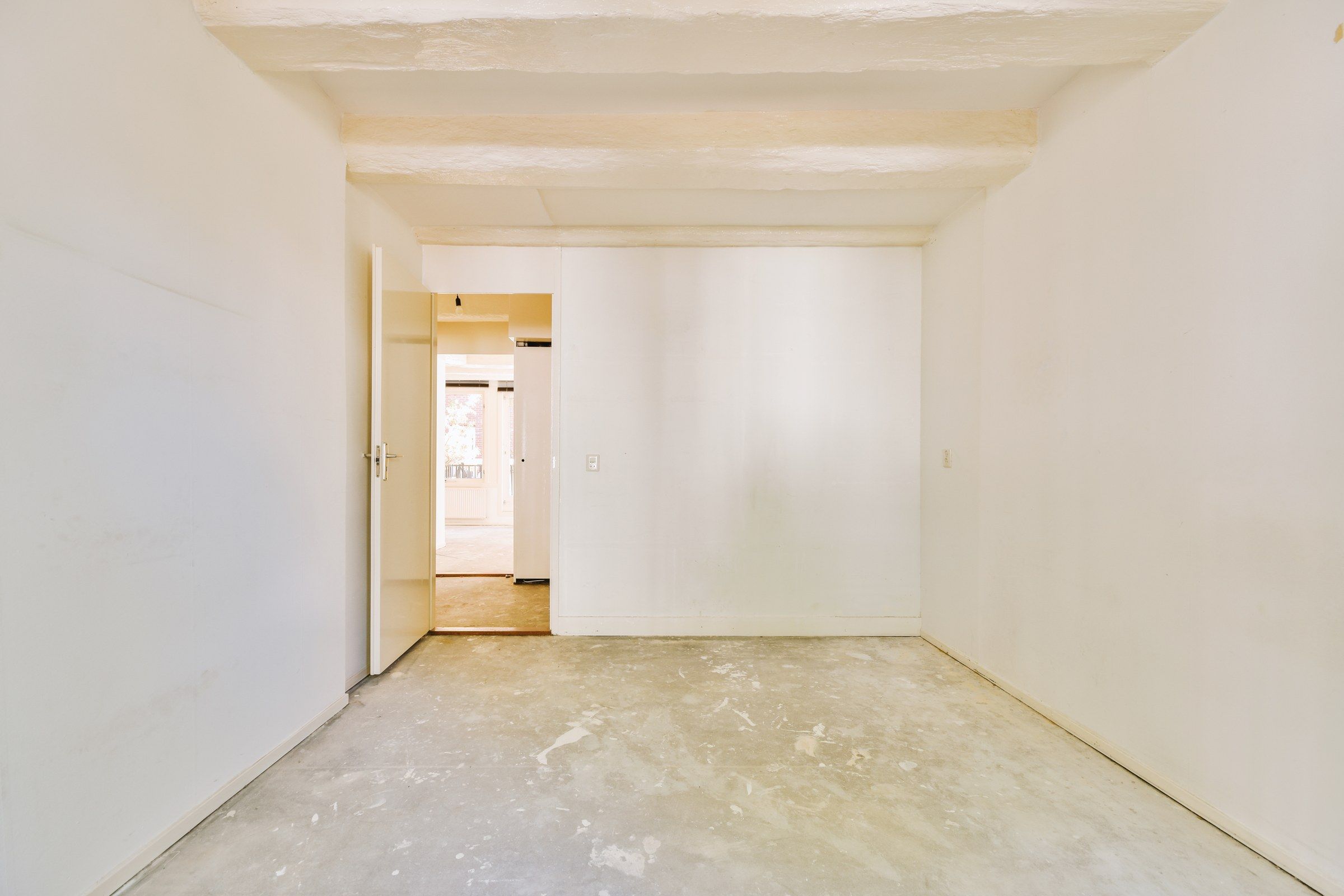
Stock photos used to illustrate the change. Not a specific project of ours.
Sprayed ceilings in Waukesha
The ranches and split-levels built across the south and west sides of Waukesha in the 1960s and 1970s nearly all came with sprayed ceilings. So did many of the apartment and condo buildings from the same years.
Texture from that period is the kind most likely to contain asbestos, which is why we start every one of these jobs with a test. It is a small cost and a short wait.
Questions about popcorn ceiling removal
Is the dust dangerous?
If the texture contains asbestos, yes, which is why it is tested first and not scraped if positive. Ordinary texture is just messy, and we contain it.
Can you do the whole house at once?
Yes, and it costs less per room that way. An empty house is ideal, but occupied homes can be done in stages.
Will the ceiling be perfectly smooth?
It will be finished to a paint-ready standard and checked with a light. Flat or matte ceiling paint gives the best look.
Do you repaint afterward?
We leave the ceiling sanded and ready for primer. Tell us if you need painting and we will say what we can arrange.
What does it cost?
Price depends on ceiling area, height, whether the texture is painted and how much repair it needs underneath. We quote after seeing it.
Work that often goes with this
Ceiling Drywall Repair
Cracks, sags, pops and stains fixed overhead.
DetailsDrywall Finishing
Level 4 and Level 5 finishes, skim coats and texture.
DetailsDrywall Taping & Mudding
Tape, three coats and sanding on board that is already hung.
DetailsResidential Drywall Services
Board and finish for remodels, additions and new homes.
DetailsGet a price for popcorn ceiling removal in Waukesha
Describe the job, add a photo, and we will send a written estimate.